
Feeling stuck? Here are 5 simple tips to get you back on track with your language learning journey.
We’ve all been there. You know you should practice English (or any language), but you just… don’t want to. You sit at your desk, stare at your books, and think “I should be studying right now.” But nothing happens. Then you feel guilty and frustrated with yourself.

Sounds familiar? Don’t worry – this happens to everyone, even your teachers! The good news is that there are simple ways to break through this mental block and get back to learning.
Why Do We Lose Motivation?
Learning a new language is like building a muscle. Some days you feel strong and ready to work. Other days, you feel tired or discouraged. This is completely normal! The key is knowing how to restart when you feel stuck.
Whether you’re learning English for your career or Hungarian for business communication, these 5 practical tips will help you get moving again.
5 Simple Tips to Get Started Again
-
Remember Your “Why” – Create a Vision Board
Before you think about grammar rules or vocabulary lists, think about your bigger picture. Why are you learning this language?
Ask yourself:
- How will you feel when you speak confidently?
- What opportunities will open up for you?
- Can you imagine yourself giving a presentation at work?
- Do you see yourself talking easily with international colleagues?

Try this: Create a simple vision board. Find 2-3 pictures that represent your goals. Maybe it’s a photo of people having a meeting, or someone giving a speech, or even just a picture that makes you think “success.” Put these pictures where you can see them every day.
When you look at these images, you’ll remember why you started this journey in the first place.
-
Get in the Right Mood
Sometimes we need a little push to get started. Music is a powerful tool for this!
Here’s what works:
- Play a song in the language you’re learning
- Choose something upbeat and positive
- It doesn’t matter if it’s pop, rock, or even techno
- The important thing is that it connects you to your target language
This simple trick helps your brain switch into “language learning mode.” It’s like warming up before exercise – it prepares you mentally for what’s coming next.
-
Create Your Learning Space
You need two types of space for successful learning: physical space and mental space.
Physical space means:
- Find a quiet corner in your home
- Make it comfortable and organized
- Keep your learning materials nearby
- Choose a place where you won’t be interrupted
Mental space means:
- Turn off phone notifications
- Set aside specific time (even just 10 minutes!)
- Do a short meditation to clear your head and set you up for success
- Focus only on learning during this time
- Use books, printed materials, or a laptop instead of your phone if possible
Remember: even 5-10 minutes of focused study is better than 30 minutes of distracted study.
-
Give Yourself Permission to Make Mistakes
Are you avoiding practice because last time was difficult? This might be exactly why you’re stuck.
Here’s the truth: mistakes are not your enemy. They’re your teacher.
Why mistakes are actually good:
- Your brain remembers mistakes better than successes
- Embarrassing moments create strong memories
- Every mistake teaches you something new
- Making mistakes means you’re trying something new
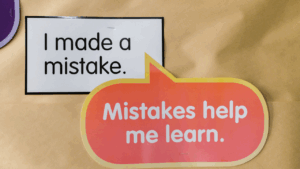
Example: I once didn’t know the word “faucet” in American English (I only knew the British word “tap”). It was embarrassing. I was looking at the handyman that my mother called who came to fix it and I was just staring at him, not knowing what he wanted. But now I’ll never forget that word! The embarrassing moments often become the strongest memories.
So give yourself permission to struggle sometimes. It’s part of the process, not a sign of failure.
-
Have a Clear Plan (Keep It Simple!)
When you don’t know what to do next, it’s easy to give up before you start. Decision fatigue is real – when we have too many choices, we often choose nothing.
Make it easier for yourself:
- Choose 3-4 topics you want to work on this month
- Gather your materials in advance
- Know exactly what you’ll do in each study session
- Break big goals into small, specific steps
When I started creating videos for my students, I felt completely lost and scared. I didn’t know where to begin! So I reached out to my friend , Mona, who is a professional photographer and she teaches crafters how to take perfect photos of their creations. Look at this beauty, for example.

She gave me practical advice and most importantly, she broke down the whole process into simple steps that didn’t feel so overwhelming. If you are interested, you can check her amazing post about breaking down the steps here.
Now, let’s continue with language learning.
For example, instead of saying: “I want to improve my English”
Try this: “This week, I’ll practice giving my opinion about 3 different topics for 10 minutes each day”
Remember to be flexible: New things always take longer than we expect. That’s normal! If something takes twice as long as planned, that’s still progress.
Your Next Steps
Learning a language when you don’t feel motivated is a skill itself. The more you practice these techniques, the easier it becomes to restart when you feel stuck.
Start small today:
- Spend 2 minutes thinking about your vision
- Play one song in your target language
- Set up a small learning space
- Forgive yourself for past struggles
- Choose one simple thing to practice tomorrow
Remember: You’re Not Alone
Every language learner goes through periods of low motivation. It doesn’t mean you’re not good at languages or that you should give up. It means you’re human!
The difference between successful learners and others isn’t talent – it’s the ability to restart when things get difficult.
What’s your biggest challenge with staying motivated? Try one of these tips this week and see what works for you. Small steps lead to big changes!
Need help creating your personal study plan? I’m here to support your language learning journey. Whether you’re working on English or Hungarian for professional communication, having the right guidance makes all the difference.